Fly fishing has a way of making simple problems feel complicated. Your cast feels off, the presentation isn’t doing what you want, and suddenly you’re blaming everything in your hand.
We also get into a little company history, why Cortland is working hard to be “the Cortland your grandpa remembers,” and where fluorocarbon actually makes a difference when the water is clear, and the fish are spooky.
A lot of casting and presentation issues get blamed on the rod, the angler, or “my technique.” But the real culprit is often the in-between piece nobody thinks about until it’s too late: the fly line.
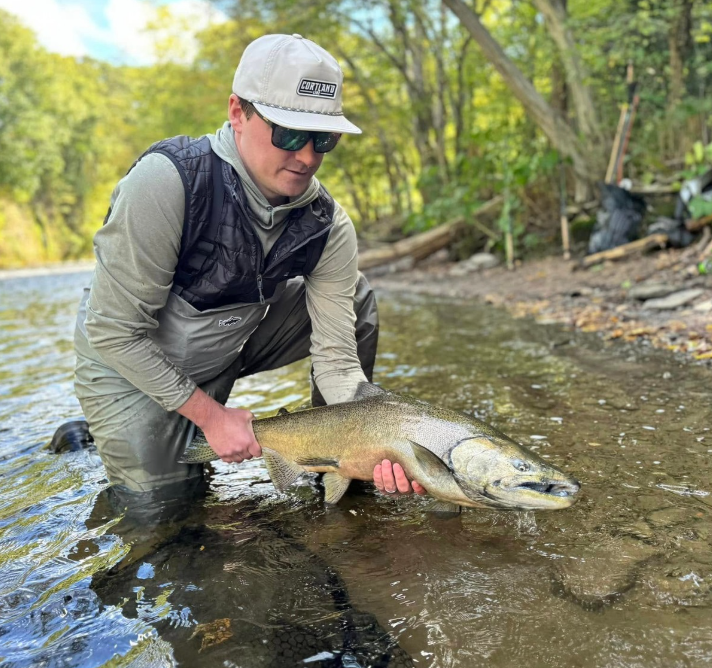
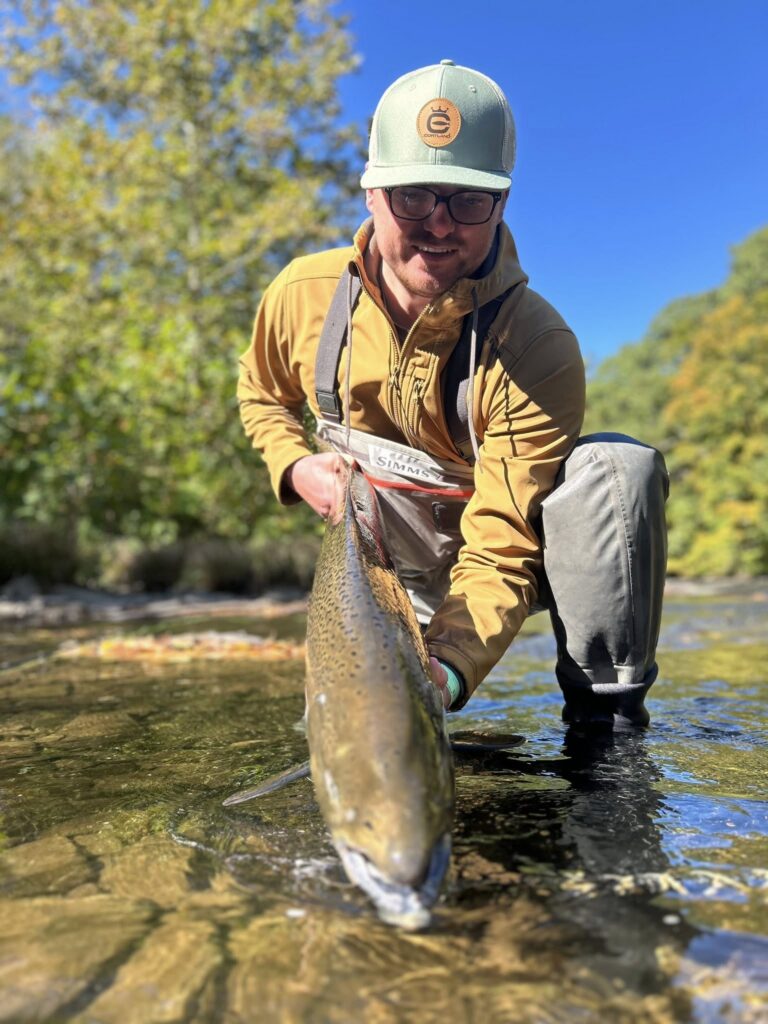
Zach started fly fishing at 10 thanks to his grandpa, who “needed a fishing buddy” and made the call for him. First stop was Tim’s Fly Shop, where Zach walked out with a Cortland Pro Cast combo.
He fished that setup hard from age 10 through college and still breaks it out today. The cool part isn’t just nostalgia. It’s the reason it worked: Zach says Cortland has always put real thought into pairing the rod and line, instead of tossing a generic line onto a blank and calling it a “combo.”
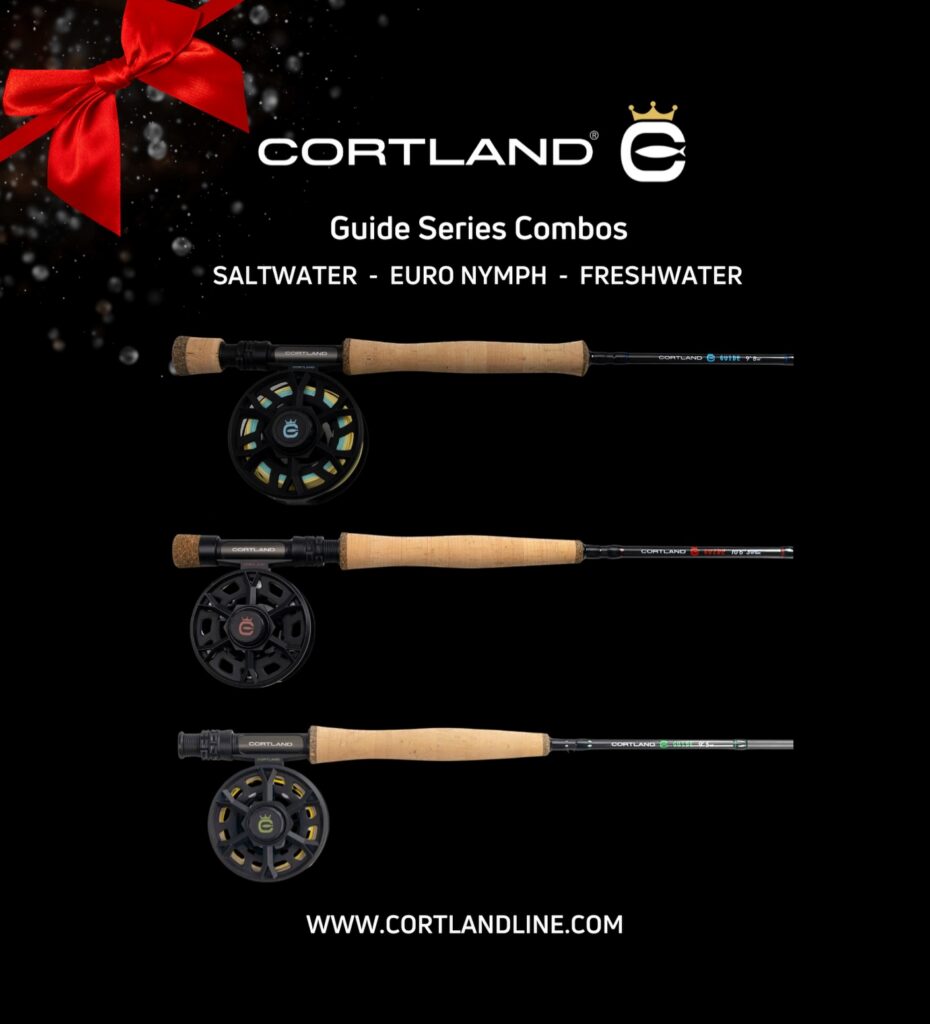
We get into Cortland’s newer Guide Series combo lineup, and this is where things get practical fast. Zach explains that as a line company, Cortland can build a rod and then design the line to match it, which is a big reason these outfits feel “ready to go” right out of the box.
These combos are also not just the standard 9’ 5-weight situation. Zach says they’ve got a mix, including Euro and saltwater models, plus different lengths and weights to cover more real-world fishing.
Cortland goes way back, and Zach walks through the highlights.
Zach makes a strong case for Cortland’s Ultra Premium Fluorocarbon tippet, especially for tailwaters and technical trout where fish are spooky and water clarity is high.
He also notes a tradeoff he sees in some situations: nylon can offer better shock handling, which can matter with big fish or certain saltwater scenarios.
Zach is based in the Ozarks, and we get into what’s happening on White River fishing lately, including a rough stretch tied to flooding, debris, and low oxygen issues.
He describes how decaying debris in reservoirs can reduce oxygen, and when water is released, it can push low-oxygen water through the system. The hatchery fish don’t have anywhere to go, and impacts can stack up quickly.
We also mention Dave Whitlock and the long arc of how that fishery became what it is today, plus an idea from John Wilson: the White River could produce a world record brown trout.
If you’ve ever stared at sink rates and grain weights until your brain melted, you’re not alone. Zach simplifies it by focusing on application first, and then using Cortland’s website info or calling the team for help.
We take a fun detour into Zach’s past work with Anheuser-Busch and how big brands think about customer connection. Zach mentions Andy Goeler and campaigns like “Dilly Dilly,” plus the shift that happens when marketing approaches change.
Then we connect it back to fishing: bass fishing has fewer barriers to entry and a bigger geographic footprint. Zach explains that you can be almost anywhere in the country and find bass close by, while trout water and fly fishing access can be more limited. Add in the perception that fly fishing is expensive and “hard,” and it makes sense why bass has a huge tournament infrastructure like Major League Fishing.
We also close with a few personal notes: Zach pitched in college and lived off a sinker-slider combo, with a great explanation of keeping pitches on the same “plane” out of the same window.
Episode Transcript
WFS 882B – February 9, 2026
00:00:00 Dave: Fly fishing has a way of making simple problems feel complicated. Your cast might feel off, presentation might not line up right and progress stalls even though nothing obvious seems wrong. In many cases, the issue isn’t the rod or angler at all, but the connection between them and the connection is what today’s conversation is really all about. Today’s guest works for Cortland Line, a company that has played a major role in shaping modern fly line design for more than a century. Today, we’re going to get into a perspective that blends time on the water with a deep understanding of how fly lines are actually designed, built and matched to rods, and why those decisions quietly affect everything that happens once the fly leaves your hand. This is the Fly Swing podcast, where I show you the best places to travel to for fly fishing, how to find the best resources and tools to prepare for that big trip, and what you can do to give back to the fish species we all love. Zach McKnight is here to dig into fly lines from a practical angle, cutting through all the confusion and focusing on what actually matters in fly fishing. In this episode, you’re going to hear how fly line, taper, and weight influences casting feel and control why many common casting issues start with line choice and actually not technique, and how to think clearly about matching rods and lines for real fishing situations. Plus, we’re going to find out where fluorocarbon makes a difference and and where you should be using this and thinking about today. Lots of great history, including a little shout out to Anheuser-Busch. Love this little story we take on the way. So. All right, here we go. Let’s get into it. Zach McKnight. You can find him at Cortland. Com. How’s it going, Zach?
00:01:40 Zach: Going good. Dave. Happy to be here.
00:01:42 Dave: Yeah. Good to have you on here. I love, uh, doing the chat, especially with some of the brands that have been out there for a long time, I think. Cortland, I’m not sure who’s got you beat, but nineteen fifteen, you know, you got to go back a long ways. And I know on my history I’ve talked about this before, but from my very young childhood I’ve been you know, using Cortland products. I remember the I think everybody talks about the four forty four. Right. The peach line and stuff.
00:02:03 Zach: But yeah, the peach. Yeah.
00:02:04 Dave: The peach. It’s pretty classic. But we’re going to get a whole update on Cortland. We’re going to talk about what’s been what’s new products, what you guys are focusing on. Before we get into all that, let’s take it back to just your background. Have you been fly fishing for a while or are you kind of new to this? What’s your first memory?
00:02:17 Zach: I have, I actually have I’ve got a pretty unique story, uh, with fly fishing. And it’s just it it is a deep rooted affinity with Cortland, actually. Um, and and it’s quite funny. So I’ve been fly fishing since I was ten years old, and I was also an athlete, so I played a lot of sports. So I didn’t get to fly fish as much as I liked growing up, but it was actually my grandpa who got me into fly fishing. Um, so when I was ten years old, he’s always fly. Fished his entire life. Um, he used to go out to Colorado and they would go on joint elk hunting trips and then fly fish for a few days. Um, he’s always fished around the Missouri, uh, tail waters, you know, taneycomo parts of the, uh, the white River down in Mountain Home. Um, so he’s always been an avid fly fisherman. So when I turned ten years old, he he basically decided for himself that I was going to get into fly fishing because he needed a fishing buddy. Turns out I loved the sport, too. So how I got into it was, is we were, you know, the big camp camping people. So they always liked to camp. So I stayed with them one weekend camping when I was not playing baseball. Um, and we went up to a shop, Tim’s Fly Shop, to be exact, up in Missouri. Still a Cortland customer to this day.
00:03:29 Dave: Oh, cool. Still a shop? Yep, yep. Nice.
00:03:31 Zach: And so we went in there and he bought me my first fly fishing combo. It just so happened to be a Cortland Pro CAS combo. And so I fished with that thing. And I just wore that thing out. And I mean, I fished with that thing from the time I was ten years old till I was in college, still using it, and I still use it sometimes to this day. I still have the rod and the combo and it works flawlessly.
00:03:55 Dave: This is the pro card. Now remind us again. Is this one of those outfits? It’s got the rod reel line.
00:03:59 Zach: Yeah. This is actually it’s like the four forty four model. So like on the reel was like a peach fly line. It was the aluminum reel, the aluminum reel seat. Very similar to what our new guide series combos we just released this year. Ah. Um, so you’re talking an aluminum reel seat. Really nice cork handle, aluminum reel, really good design, good quality fly line on a really strong rod. You know, a rod that’s durable throws the line perfectly designed for each other. That’s the big thing right. Like I think a lot of times and sorry just to kind of we’re kind of hopping around here. But like when you when you think about a lot of the modern modern combos, right. Like a lot of them aren’t really designed with the thought of pairing the line and the rod together. Right. It’s they somebody builds their blank and they just get a line and put on it. Right.
00:04:52 Dave: Just a general just a generic line.
00:04:54 Zach: Right. And I think that’s something that Cortland’s always done relatively well, is they’ve thought about pairing the line with the rod, because as line makers, we and it’s nothing on the rod makers. The rod makers do know this, but it’s just you know, they’re limited by capabilities like we design lines for a living. So like we can design a rod and then we can design the line to go with the rod super easy and quick. So Cortland’s always done a good job with that. And that’s something we’ve implemented back into our system with these new guide series. Rods is putting the correct taper on the rod to make it perform correctly. And I think that’s why people are falling in love with these new combos. So much is just because the line is tailored to the combo and it just works beautifully together.
00:05:34 Dave: Yeah, it’s ready to go. Are these rods in the a mix of lengths and weights, or are they mostly like a, you know, eight or nine foot kind of rod?
00:05:42 Zach: Oh, we’ve got them. You know, we’ve got a euro, we got a new euro launching. So we’ll have two euro models at ten and ten and a half foot and a ten foot model. We’ve got nine foot, models from five weights all the way to eight weights. We’ve got a saltwater version. We’ve got an eight foot four weight. We got a ten foot four.
00:06:03 Dave: Oh, wow.
00:06:04 Zach: Yeah, we got the mix.
00:06:05 Dave: So these are all in. So you literally have these package deals that are ready to go in the box for all these different species.
00:06:12 Zach: They’re in the market right now. This was the first year for them.
00:06:14 Dave: That’s cool. Yeah I don’t think you see I think you’re right. A lot of the rods out there, the combos are just a nine foot five weight, you know, and that’s pretty much what you get. I don’t think there’s a ton of people out there doing this where you’ve got specific especially like Euro. Right. That’s kind of high level right.
00:06:27 Zach: Yeah. Yeah. So we’ve got a seven foot three coming out this year. Um the ten and we got another Euro model coming out this year. So like we’ve we’re trying to cover the bases right. Like we want everybody to be able to have an option in this series. So but kind of going back to the pro cast. Like that’s what I think made the pro cast work so well. Was that that four forty four peach line fits so perfectly with that combo. That was just a super easy ride to pick up and learn on. I was successful right away and it was just super easy to throw, and so that’s kind of how I got into it. And like I said, I still use that combo today. It works great. I break it out every now and again. Even has the original peach line on it.
00:07:07 Dave: Yeah, it’s got the line.
00:07:08 Zach: Yeah. So like, it’s it’s, uh, it’s kind of a unique story. Like, not everybody gets to work for the company, right?
00:07:15 Dave: Well, take us back there. Yeah. How did you go from that kid with the pro cast to now working for Cortland? Was that a pretty straightforward path, or how did that come to be?
00:07:24 Zach: Yeah. So just through mutual, uh, mutual friendship, you know, I had a friend who knew a person that worked for Cortland. They were needing some help. He knew I fly fished. He was like, hey, this. You know, this may be a good fit for you. So I reached out to the person, had a conversation. Um, and that person turned out to be one of my close friends now. And, you know, we kind of came to an agreement, and I came on board, and, uh, I’ve been pretty lucky. I mean, I’ve worked for two great companies. I’ve worked for Anheuser Busch and Cortland Line, and that’s it. In my career.
00:07:55 Dave: Oh that’s amazing. I saw that, I saw the Anheuser-Busch. Of course that’s the Budweiser, right?
00:07:59 Zach: Yep. Correct.
00:08:00 Dave: Yeah. We’re definitely going to talk about that because we’ve got a few folks here that love to drink a few beers. So we’ll definitely.
00:08:06 Zach: Oh, nice. Yeah. Yeah. I know a little bit about the beer business.
00:08:08 Dave: Oh you do. Well, here’s a good fun fact. This is what I love, the Anheuser-Busch. This goes back to probably high school days. You know, the what do you call it? The. This is the famous Budweiser beer. We know of. No brand produced by any other brewer, which costs, you know, like, I could spout that off. That’s kind of a funny thing, but that’s one of those high school things, right? You’ve got you’re at a party and you memorize the the Budweiser. You call that the anthem? Is that still the anthem?
00:08:31 Zach: Yep, yep. That’s the anthem. So in my opinion, one of the best marketers to ever do it was Andy from the Bud Light team or the Budweiser team, like he retired, I think, about seven or eight years ago, um, before. It’s easy to kind of tell, in my opinion, when they when he retired, because that’s when the whole marketing scheme shift happened with with Anheuser Busch. But, uh, he was one of the best to ever do it, man. Um, he threw the Dilly Dilly campaigns together. The the, you know, the famous, the old school famous, you know, frog ad.
00:09:04 Dave: Oh, the frog ad. We’ve had tons, right? Tons of great marketing.
00:09:07 Zach: Yeah. I mean, just big, big pushes and, like, that’s that’s all him.
00:09:11 Dave: That’s Andy. What’s his name?
00:09:13 Zach: Uh, Andy Goeler, I believe, is his last name.
00:09:15 Dave: And that’s essentially your role, right?
00:09:16 Zach: Yes, yes. Sales and marketing. Yeah.
00:09:18 Dave: What do you think? What did you learn? I mean, were you with Andy? Did you learn from him or what would that look like?
00:09:23 Zach: No, I was not. I was not right on on the marketing team with Anheuser-Busch. So I was on strategy and development. So I wasn’t working with him, but I always paid attention to what they did.
00:09:33 Dave: Yeah. You saw it?
00:09:35 Zach: Yes. Yes, that is what my degree is in. Like, I do have a marketing degree. So like I’ve always been fascinated by that. But yeah, I did learn, you know, take learnings from being at Anheuser-Busch because, I mean, if you think about it like they’re a marketing powerhouse, right? Like, there’s nobody that markets like them. Their reach and expansion across so many different categories is something that’s quite unique.
00:09:58 Dave: What about fly fishing? Is Budweiser. Have they touched? It’s a tiny market price compared to some of the other markets. But are they are they in that market.
00:10:04 Zach: Not so much in fly fishing.
00:10:06 Dave: No they’re not.
00:10:07 Zach: No. It’s a smaller market. They are in fishing in general. They’ve done some cool collaborations, like trying to attract those customers with certain brands. The way that they run things is relatively siloed at Anheuser-Busch. So a lot of the brands are have brand teams, and those brand teams have their own kind of, you know, strategic initiatives and so on. So, um, it’s not like a top down strategy for them marketing wise. It’s more, you know, generalized around the brand and kind of the customers they want to attract. So I’m sure you’ve seen some of the stuff with like Busch Light, um, with like the fishing cans and stuff like that in the summertime and they change them to the camo cans in the winter time like so. They’ve done some things like that to kind of create some affinities with the outdoor market, which I think is great. You know, it’s a good promotional, um, because like, you see, you know, if you talk about the customer. Right, like, you see a lot of people that drink Bush like that, maybe don’t get into the industry. Right. They don’t fish, they don’t hunt. They just, you know, they that’s their brand that they consume that maybe now that like, if Anheuser-Busch is like putting that out in front of them, maybe they try something in the sport because now they associate with that. You know, it’s it’s something very similar to what I see with some of these clothing brands, right, where like consumers will, will, you know, come fall into a brand image, so to say. And then they also want to fit in with that brand. So they start doing the activities with that brand.
00:11:31 Dave: Oh right. Yeah. So they find they start with the brand first then then they see the brands into these activities. And maybe fly fishing is one of them. They’re like, oh I haven’t thought yeah fly fishing that. And then they get into it because of that brand.
00:11:41 Zach: And then they love it, you know. So you know there could be something like that that happens, you know, with some of those big heavyweight brands kind of diving into the industry. It also speaks well to the health of the industry, right. Because these big corporations, these mega corporations would not be targeting these markets if they weren’t growing. So I think it also bodes well to see some of these big corporations also look at fishing. So it bodes well for the total industry in my opinion.
00:12:08 Dave: Yeah I agree. No, I think that the smart brands are I always have this saying I said a lot, but the riches are in the niches. You know, it’s like niching down, right? But I feel like, yeah, if you want the fly fishing market right, you know, it’s a small market comparatively. But yeah, you can if you connect with those brands, you can kind of move the needle, you know, in that, you know, outdoor space, whatever it is. But but this is cool because I think Courtland, you’re in this role, right. And and you guys are probably thinking of similar things. What does that look like? What’s your daily look like? Are you I mean, do you guys have maybe talk about the products a little bit. What’s your focus. You know this year as we’re going into twenty six.
00:12:40 Zach: So our focus this year is continuing to grow awareness around the brand, right? So, so Cortland used to be the biggest fly fishing company in the US by far.
00:12:53 Dave: No kidding. So it was at one point and that was probably in what, the eighties or nineties? Somewhere in their.
00:12:58 Zach: eighties. Yeah, eighties, nineties, seventies. So they were the biggest.
00:13:02 Dave: And part of that was you guys have always had the lines. Right. And there’s not a lot of line companies out there, right? There’s only a handful of real, actual line companies that make the lines.
00:13:09 Zach: Yeah, there’s only a handful. Um, and we were the first to ever develop the Plastisol based fly line. Right. Because before Plastisol, it was silk gut fly lines.
00:13:18 Dave: So you’re the first that did the plastic the the not is it PVC or what is the tech.
00:13:22 Zach: Uh PVC yeah. Plastisol PVC it’s all. Yeah. So Leon Chandler uh, who’s I’m sure you know of, he was the one kind of running the company through that, you know, the golden era of Cortland, I would call it, where it was the largest. There was a lot of good innovation coming out, and they’re the ones that kind of developed that first original three three three and four four four series fly lines.
00:13:47 Dave: And what was the three three three versus the four four four? What were the difference between those?
00:13:51 Zach: So the difference between those two was the four forty four was always more of a premium style option, I believe. And then the three thirty three just did not have a loop on it. I’m not one hundred percent sure on that.
00:14:03 Dave: Yeah, I think you’re right. It was more durable, like the four forty four was probably the more durable line. And just it cost a little more.
00:14:08 Zach: Yeah, but that’s where the peach was ultimately born from, which was the fly line of the millennia back in the, in the, you know, the, I guess to be from nineteen hundred to two thousand.
00:14:19 Dave: Oh, so it was so the four forty four when did the four forty four start? When was like the first year it came out?
00:14:24 Speaker 3: I believe it was in the sixties.
00:14:27 Zach: Or 70s.
00:14:28 Dave: Somewhere in there.
00:14:28 Zach: Yeah, yeah, between sixty and seventy, I believe. Um, I’m not sure on the exact date, but so then the the company changed hands a few times after Leon passed in terms of ownership. And so there was some mismanagement there. Uh, the company really wasn’t, uh, regarded as highly as it used to be. And so a lot of awareness just kind of fell away from the brand. Right? And then you had some, some emergence of some other, more competition. And there was not a lot done to drive the business forward. Right. Um, fast forward to, you know, twenty fifteen, some new ownership comes in, takes it over. You know, John Wilson was an integral key in that. I’m not sure if you’re familiar with John, but he’s the he’s the president of Cortland line. There’s not many people that have been able to do what he’s done fishing wise. Um, he’s coached the USA fly fishing team multiple times, won their first medal. Excellent caster. Uh, been on several TV shows back in the day for fishing. He was a guide for On the White River for forever.
00:15:35 Dave: Oh, wow. What was his name again?
00:15:36 Zach: John Wilson. Excellent angler. Excellent person, knows the fishing industry but also knows the business side of things too. They came in and started straightening the company out, then, um, got it on its feet again. And now we’re getting to the point where we’re getting Cortland back to what it used to be. Right. So making sure that we have good quality products for customers to use. Making sure we get back to innovating, being innovators in the in the industry. Right. We’ve been the leading innovator for, you know, years and years and years. But making sure that we’re we’re continuing to stay the lead innovator and also listening to customers. Right. Like we our main purpose at Cortland is to make people successful on the water and help them have a good time. That is our main focus. So listening to our customers, making sure that we take in their feedback and make their experience better, you know, like what can we do better to to make them more successful? Some some cool stories about Leon and kind of what helped made the make the company so much better is like, Leon was a friend to everybody, right? He would just go fish and he would just sit on the bank. If he would see somebody struggling, he would go and help them teach him something, you know. You know, he would give him the rod and reel out of his out of his car, you know, hey, here, here’s here’s a new reel. Like, if the reel is busted up, like, he just wanted people to be successful. And that’s that’s what John Wilson and the direction of the company is like. We are back to that where it’s like, what can we do to make the consumer more successful? So, um, all of the stuff we’re doing is tailored around that, like showing people what lines they should be using for certain scenarios, more informational type stuff. That’s the direction of the company, right? That’s our main focus. So getting that awareness out that like, hey, Cortland is back. Cortland is um, the the Cortland, your grandparent, your grandpa remembered and fished with Like that’s the Cortland that we are today.
00:17:40 Dave: Fly fish with me Utah discover year round blue ribbon trout fishing on the famed Provo River. Choose a guided walk and wade or a scenic float and experience big trout, stunning canyons and unforgettable days on the water. You can book your adventure right now at Fly Fish with me Utah.com world class water. Incredible fishing that’s fly fish with me Utah dot com. Trout Routes by Onex is built for fly anglers who want better Intel without spending hours digging for the information. You’ll get access to public land maps, stream access points, regulations and even road and trail maps all in one place. It’s become my go to app for scouting new trips. You can check them out right now. Go to Fly Routes and download the app today. Right. And big part of that is lines, right? You guys had do you guys still do? I mean, you’ve got lines. Obviously it’s huge rods, reels. What else is it that you guys do. Are you focusing on those ones there. Those products.
00:18:44 Zach: So so I mean we are Cortland lines. So lines are the main front focus.
00:18:49 Dave: That’s number one.
00:18:50 Zach: Yep yep. So we’re we still make all the lines here in the US. Uh up in Cortland, New York where they’ve been made since nineteen fifteen. We don’t cut corners on production either. That’s the one big thing is we make sure everything’s done right and we’re going to continue to to practice that. So outside of lines, we kind of have two facets that we focus a little bit on as well, which is the rod business which is combos mostly that we’re really, uh, you know, kind of ramping up just because we think that we can help people out in that department. And then we have some of the best fluorocarbon tippet in the market. Ultra premium.
00:19:27 Dave: No fluorocarbon.
00:19:28 Zach: Yep. Ultra premium fluorocarbon tippet. That’s been a pretty good product for us as well. That’s that’s something. If you haven’t tried it, you need to try it.
00:19:36 Dave: Right. Good. So we’ll check out the floor. And is this what do you think are the which anglers are really most excited about the fluorocarbon. Or is it kind of everybody should have some of this.
00:19:44 Zach: Everybody I mean guys love it. You know your weekend anglers love it. You’re you know you’re super passionate. Avid anglers love it. It’s completely different than a lot of stuff that’s on the market. And it performs really, really well.
00:20:00 Dave: What is the big um you know fluoro seems like it’s a little more expensive right, than mono. But when would you not want to use fluoro or what do you think fluoro is perfect for.
00:20:09 Speaker 3: So I mean.
00:20:09 Zach: It all depends on the on the use case. And a lot of people have their own opinion on this, right?
00:20:15 Dave: Yeah, I’ve heard a lot of them on the podcast. We’ve had this discussion. I’ve heard both sides of the story. Right. It feels like it feels like fluoro is I don’t know, it’s like it’s very strong, right? Abrasion resistant. That’s one big part. Yeah.
00:20:27 Speaker 3: Yes.
00:20:27 Zach: So like I like to use fluorocarbon a lot just because of the refractive index. Right. So like I fish a lot of tail waters. So I like to I like to use a lot of fluorocarbon.
00:20:38 Dave: So it’s stealthier. It’s more it doesn’t shine like in the sun. It’s better for that being stealthy.
00:20:43 Zach: It’s got a better refractive index. So uh nylon I think refractive index is slightly above water. But like our ultra premium’s refractive index is basically water. So it’s ultimately invisible when it’s in the water. So like with those tail waters like we’re using, you know, six and seven x, those fish are super spooky. A lot of times, you know, you know, you’re talking really clear low water type situations. So like I’m using really, really thin clear line to help give me an advantage to to catch more fish.
00:21:16 Dave: Right. So so you got the refractive index. You got the strong. What are the other features of the fluoro.
00:21:21 Speaker 3: Are you talking.
00:21:22 Zach: Our fluoro in particular. Are you just talking fluoro in general.
00:21:25 Dave: Or maybe. Yeah maybe either in general or and your fluoro maybe talk about both.
00:21:28 Speaker 3: So some of.
00:21:29 Zach: The things that our floral is, is obviously the strength, the refractive index being so low, less memory. So like ours won’t tangle on you as bad. If it does get a tangle, you can just straighten it out and give it a nice little tug, and it will have zero memory and go back to its normal state. Um, which is great. So, like, that’s, that’s some really good attributes when you’re talking about fishing, you know, and then with nylon, nylon is good in a sense that like, you know, I use a lot of nylon when I’m in saltwater fishing. It’s got a little bit better shock abrasion to it. So like, you know, big fish and stuff like that. They’ll you know, it handles the shock a little bit better in fluorocarbon in my opinion in some cases. So you can use it there. But you know it’s a it’s a crap shoot. Everybody’s got an opinion on it.
00:22:21 Dave: Yeah they got opinion. Does the fluoro sink a little more than the mono. Is that.
00:22:25 Zach: Yes it does. Yep. Mono will float float sink which is always the opposite. That’s how I’ve always remembered it is. You know, you would think that fluorocarbon would float with the flow, but it’s the complete opposite.
00:22:36 Dave: It’s the opposite. Okay. Yeah. So so those are the things. And then you guys have created this. Of course we won’t go into the the background, but you guys have created this product that sounds like it’s uh, kind of standing out there. Is it, um, how do you maybe describe that? How do you guys get the word out on that? Is that just kind of a word of mouth thing on this? I guess we’re kind of doing it now, Sharon, you know this, but how do you feel? Like, you know, like, if somebody’s listening now, should they just get it out, try it out? Or how do they, you know, experience this?
00:23:01 Zach: I mean, it’s been on the market for a while. Uh, most of their local shops should be carrying it. If their local shop doesn’t carry it, they can find it online at some other shops or on our website. So it there’s, there’s multiple different avenues to, to to get this product and try it out.
00:23:18 Dave: What about you. What’s it sounds like? You get out there and do a little fishing. What’s your do you cover all over the country or are you focused on trout or other species? You’re focus.
00:23:26 Zach: Well, I wish I got to fish a little bit more than I did. Um, quite busy normally, and on the road a lot. So when I’m home, I’m fishing tail waters. I love doing that. I normally get a little bit of time in the fall before things get too crazy for the fall selling season for the next year, so I get out and do a little bit of dry drop, and that’s some fun stuff I like to do.
00:23:48 Dave: Okay. And are you located out? Are you on the East Coast?
00:23:50 Zach: No I’m not, no I’m not. I’m in the Ozarks.
00:23:53 Dave: Oh, you’re in the Ozarks. Oh, cool. That’s us. We’ve been doing quite a bit of episodes around the Ozarks. It’s been awesome learning about the that whole area. In fact, we’re going down there to fish the white this next year. Doing an event down there.
00:24:04 Zach: Oh, nice. What part are you going to.
00:24:06 Dave: Uh, you know, we’re, uh, it’s, uh, we’re doing an event with Project Healing Waters and, um, and Chad Johnson, and we’re going to be.
00:24:12 Zach: Okay.
00:24:13 Dave: Yeah, we’re going to be doing. I’m not quite sure, actually. He’s gonna they’re kind of leading the way. I’m assuming, um, it’s going to be in September, so you know what I mean. I’m not sure if we’re gonna have a lot of big shots at the giant fish, but I feel like there’s always a shot down there.
00:24:25 Zach: Yeah, you never know. You never know. This year it’s been pretty tough down there. So I’m glad you’re waiting till next year, has it? Yeah, they actually they had a big fish kill, um, in the hatchery.
00:24:36 Dave: Oh, I heard about that. The hatchery? Yeah.
00:24:38 Zach: Yeah. So when we get really bad floods, what happens is, is it flushes a lot of debris into the lakes. And then down at the bottom, that debris starts to decay, and it just eats up all the oxygen. And so when they generate water, they’re just basically pushing on oxygenated water through the river system is what what is what I’ve been told. And so like fishing, the oxygen levels are just so low in that in the river that, uh, fish are just suffocating or having to run downstream to find water. So and the fish in the hatchery have nowhere to go.
00:25:09 Dave: Right. And the hatchery, they’re done. So. So basically they lost to brood.
00:25:12 Zach: I heard it was pretty bad what they lost.
00:25:14 Dave: Well, that’s we’ve talked about that. We’ve heard the story of that is really interesting because it goes back to the history of stocking those trout, which was who was it? The, the old, um, he passed away the last few years, right? He was down in that area. Um, I’m trying to think I’m drawing. I’m drawing a blank. It’ll come to me. I know we’ve talked a lot about it, but they basically. That’s how it worked. You know, he went down there, stocked these brown trout, and this was probably thirty years ago or whatever, maybe, maybe more. And now they grew into that fishery. It was sounds like it’s had a little impact, but um, but I’m sure it’ll come back. That’s the great thing about these fish, right?
00:25:49 Zach: They’re resilient man.
00:25:49 Dave: Yeah. They’re resilient. They’ll come back.
00:25:51 Zach: Funny thing, John Wilson always says, I don’t know, it’s actually not really funny, but like, he’s like, the world record will come out of the white River.
00:25:57 Dave: Yeah.
00:25:58 Zach: The world record. Brown. He goes, they’re in there. He’s seen him.
00:26:00 Dave: And the name I was thinking, of course is Dave Whitlock.
00:26:03 Zach: Yep. Dave. Yep.
00:26:04 Dave: Yeah. So Dave, the story was about I don’t know how long it might have been fifty years ago, but he first stocked those trout in there and then it’s grown into the fishery. But but so cool. So we know where you’re at now. You’re down in a really cool part of the country. So you get some trout fishing in and all of that. Um, what does it look like with just Cortland when you look at your lineup as you guys focus on twenty six, are you going to have we talked about the main focus or do you have any other products you guys are going to be looking at?
00:26:27 Zach: We got some stuff in the works. I’m not going to say I don’t want to give away our secrets. We got some things up our sleeves that we’re, uh, we’re going to be rolling out soon that are quite exciting. So that stuff will start coming out probably this year and. And over the next couple of years.
00:26:42 Dave: Is that how it rolls out? You guys kind of roll it out over a kind of a slow rollout. When do you announce things? When’s a good time to be looking at the new products for the year?
00:26:50 Zach: So right now is a good time, right? So if you’re a retail customer, right now is a good time. We obviously do some selling in the fall with our with our wholesale partners. Uh, that way that they can plan and also gives us time to plan demand uh, so that we know like what we need to, to, to satisfy all the needs of our customers in the market. But as a retail customer, about, you know, middle of January into the middle of February is like when you should be looking at Cortland’s website for for some new goodies coming out middle Jan.
00:27:18 Dave: And yeah. So right now as we’re talking it’s, it’s just about middle of January. Right. We’re getting we’re getting pretty close, right.
00:27:24 Zach: And always check back because you never know what’s coming.
00:27:26 Dave: Yep. Do you guys do a little bit of, uh, email? Looks like. Yeah, we can get on the. Never miss the adventure. We can get on the email list here and track that down a little bit.
00:27:33 Zach: Yep, yep. We always, uh, we always send communications out regarding new products when they’re available and what they’re going to be. Um, we also do blogs too. Like, we have some of the best ambassadors in the world, like one of our ambassadors, Christian Torres. He just caught possibly the biggest GT ever caught on fly down in Oman.
00:27:50 Dave: No kidding.
00:27:51 Zach: Yeah. You got to go check it out.
00:27:52 Dave: Where do we find that blog? If we want to look at the blog.
00:27:54 Zach: We haven’t written a blog on that. But like we’ll highlight that in a blog, like coming up soon, but like, we have tons of our ambassadors that, you know, we partner with write blogs, they share their experiences, we share tips and tricks, and that’s on our media page on the website. But yeah, we email all that stuff through the info too. So like we share that information through the email. So if you sign up for the email blast, you get to, uh, you know, we’ll keep you up to date on any product releases, new product stuff as well as, you know, releasing cool stories and blogs from some of our ambassadors and stuff like that.
00:28:25 Dave: Yeah, I’m looking at now. Yeah, you got a bunch of. I’m looking at a few. You got Christian Pretorius. Uh, Lucas, you got flip. Well, of course rip right. Flip palette.
00:28:35 Zach: Yeah, yeah.
00:28:36 Dave: Um. Kelly Gallup. Yeah. You got. And you guys have a mix. That’s the thing. You also a lot of some of the brands out, right? You have the fly. But do you guys also are you covering other types of fishing or is it mostly fly.
00:28:47 Speaker 4: We do cover other types of fishing too. Yes. So we do make braided fishing.
00:28:51 Zach: Line in our facility.
00:28:52 Dave: Yeah.
00:28:53 Zach: I’m obviously biased, but it’s some of the best braided fishing line in the industry.
00:29:00 Dave: And this is braided for if you’re fishing conventional for whatever species.
00:29:03 Zach: Yes. Correct. Conventional conventional braided fishing line. Again kind of going back to like how our how we think about manufacturing is, is we don’t take shortcuts. We do things the right way, even if it takes a lot of time. Right. So like in the braiding industry, a lot of people have, you know, moved to high speed braiders. Um, they do heat stretching and all these other things that increase their yields, you know, drive profits. But obviously like it’s at the detriment to the customer. Right. Like it creates a less superior product. Um, we do it the old school way still, man. I mean, middle graders in there cranking on a on a big bench belt driven steel on steel. Loud, as loud as hell takes like depending on the pound test takes up to thirty days to get a five thousand yard spool. But what you get is a product really kind of unlike anything else on the market. It’s super durable, it’s super strong. Uh, we have a proprietary dyeing process that makes it hold its color better than anything on the market. Um, and I think that’s why we’ve been able to kind of attain some of these, uh, top tier bass pros, you know, guys like Elton Jones Jr, um, Fred Barnes, um, Brandon Cobb, we got some new big sticks coming in this year. We got Jake Lawrence, who’s a top dog on the MLF tour, Nick Hatfield.
00:30:20 Dave: Oh, this is cool.
00:30:21 Zach: We got Jacob Wall, like, we got all these guys that are switching to the brand.
00:30:24 Dave: What’s the Moff tour?
00:30:25 Zach: Major league fishing.
00:30:26 Dave: Yeah, major league fishing. So there’s actually so you know a little bit about this. This is interesting. This would be like major league including the bass circuit and all that. Yeah.
00:30:34 Zach: So like Brandon Cobb’s on the bass circuit. But then the rest of those guys are on the MLS circuit okay.
00:30:40 Dave: So describe that a little bit. This is really interesting because you know I think we’ve heard of course you mentioned Euro nymphing I mean the competitive we’ve covered team USA. And I think it’s really been amazing because right now team USA is literally dominating the world in all women juvenile, you know, pretty much all everybody. But but talk about this, the MLF that makes me think about Major League Baseball, it sounds like, is that the same sort of where that’s gone? Or because the bass circuit was always known as just the bass circuit? Seemed like that’s what you heard about, right?
00:31:06 Zach: Right. So now there’s there’s tons of different circuits out there. Right? So I mean, you got the you got obviously bass, you’ve got MLF, you’ve got Mpfl. So like those are I would say are the probably the main three right now. But then like even in MLF, like you have the Bass Pro Tour, which is like the top tier pro tour, right? But then you’ve got like the Fenix series, you got the Toyota Series, you got the Open Series, like you’ve got all these different like sub series where guys can qualify through, kind of like how bass has the bass opens and stuff like that. Um, there’s also a college in high school fishing tour in the MLF family farm system. So yeah. So that’s like the dynamic of professional bass fishing has changed quite drastically over the last five to seven years.
00:31:48 Dave: Oh it has. So the last five years this has really changed a lot. And what is it about again it must be just market size or. But what do you think when you look at the bass. Because you’re kind of sounds like you got your, your foot in kind of both of those doors. Why doesn’t fly fishing have some more of that maybe. Or and why is bass so big or you know what I mean. Why is that major league fishing thing? It seems like there’s a lot more money there.
00:32:08 Zach: So I think the main reason why there’s two main reasons why one is geography, right? Not everybody has trout around them. Not everybody has access to a river fast. You know, there’s a good chance that you could be anywhere in the US. And there’s a bass within thirty miles of you.
00:32:27 Dave: So that’s huge. So pretty much the whole country. So three hundred, whatever our population is, everybody can fish for these species.
00:32:33 Zach: Correct. And then I also think that there’s the barriers of entry with fly fishing that people associate with it. Right. Like I’m going to have to go spend five hundred to one thousand dollars to get everything I need to be successful.
00:32:45 Dave: Yeah, I gotta learn to cast. It’s too hard. Yeah.
00:32:48 Zach: It’s hard to do. Yeah. Yep. So I think there’s some stigmas around the sport to kind of just people tend to shy away from, you know, and and that’s where us, as you know, brands, fly fishing brands have to do a good job of breaking down those barriers for people. Right. So you know, yes, we want to make good quality products, fly fishing products. Right. But we also want to make sure that we make stuff good enough where people can get into it. You know, at a good price, where it’s not overbearing and it’s still going to perform well and also give them the information they need to be successful. You know, to learn quickly.
00:33:26 Dave: Yeah, exactly. And that sounds like that’s your guys’s focus. You have the you have those outfits that are ready to go and kind of everything Euro nymphing and I have heard I think euro maybe that’s because of the, the president or whatever. But that’s one thing I’ve definitely heard about from you guys is some of that Euro stuff you got going on. Is is there a person in there, or do you guys have ambassadors that are really focused on that?
00:33:45 Zach: I mean, I would say we do, you know, a lot of the people. So pretty much everybody that works at Cortland is a fly fisherman themselves too, which is great. Right? So they know the sport, they know what they need. They know what needs to be made. They know the products. So like when you have a lot of people that understand and fish, you know, hard almost every day, like they know kind of what needs to be done. And our guys, they love the Euro nets, they love the streamer fish. They love to do it all. I mean, they’re just fishy dudes. So, you know, they’re always talking with, with, you know, customers and shops and, you know, just talking shop. And like we take that feedback in and we just, you know, we compile all the feedback and then we create the products based off the feedback. And it’s crazy when you do that the stuff tends to turn out pretty good.
00:34:34 Dave: Is that uh, is the back to the four forty four line? Is that line very similar to that line of the seventies or 80s?
00:34:41 Zach: Has it changed?
00:34:42 Dave: It hasn’t changed. Same line. Same line. That’s it. And I’ve heard that right. You make something that’s almost perfect, right? It worked great. There’s no need to really tweak it. It’s good to go.
00:34:51 Zach: What’s what’s the saying? If it’s not broke, don’t fix it.
00:34:53 Dave: Yeah. That’s it. Awesome. What about on sinking lines? That’s another line I remember, you know. Well, a lot of people, you know, that’s a big focus, right? Do you guys have that whole line up there? Do you have any specialty focus in the sinking line?
00:35:06 Zach: Yes. Most definitely. Yeah. We make we make several sinking lines. We make sink tips, you know, in several different types of sinking lines, different ipss for certain scenarios. One of the new sinking lines we’re rolling out is a Kelly Gallop series of sinking lines. So we designed a line of, of of sinking lines with Kelly. You know, he’s a famous streamer fisherman. He’s known for it, you know, a great line designer. So partnering with him was a good, uh, was was a lot of fun. Um, in developing these three, uh, two new sinking, uh, fly lines. So, um, those will be hitting the shelves here in a couple of weeks, probably.
00:35:44 Dave: Oh, cool. So those aren’t out yet?
00:35:46 Zach: Not yet. They’ll be out in a couple weeks.
00:35:48 Dave: Oh, well, by the time this episode, when this goes live, they will be out and they can go check those out, most likely.
00:35:52 Zach: Yeah. Yeah, that’ll probably be out probably first of February. They’ll start to be trickling out into the market.
00:35:57 Dave: Okay. And what is the streamer line I know you’re not the super guru expert on the lines. Maybe we’ll do another episode with your line guys. But what is the how is that one different say than maybe some of the other lines you guys have or just, you know, in general.
00:36:12 Zach: So it’s got a few extra technologies on it. Technologies, you know, in terms of features, um, you know, it’s got line printing on it. It’s got our reinforced tungsten technology, which is just, you know, a little bit more stronger, durable line going to sink a little bit better. And it’s obviously got, you know, front front and back welded loops. It’s it’s designed by Kelly. So you know, it’s taking his specifications in all the years of knowledge that he has streamer fishing and basically putting that into a line because like Kelly’s design lines before. Right. And that’s kind of what was cool is like Kelly, when we were talking with Kelly and we were we were building these lines out like he was making tweaks still like he was wanting to like, try different things. Like he’s always trying to make the line better to himself. So he’s like, hey, like, let’s try this and see. Like, if this even makes the if this makes the performance even better. So there’s a lot of value in being able to, uh, you know, utilize Somebody who’s, you know, renowned for streamer fishing like Kelly to, uh, to kind of help dial in how to make a line. Perfect. Right. So we put a lot of time and effort into that, into the, into these two lines to, to get them to that point to where they’ll perform. Exceptional.
00:37:28 Dave: Right. That’s awesome. And I know we’ve we’ve had them on the podcast a couple times. I know he’s talked about the um, and you know, streamers aren’t always just giant flies, right? There might be streamers that aren’t that are smaller, you know that. And so you guys probably talked about that covering the different range. Like what I mean what makes it a do you guys cover. Do these lines cover everything from like light to heavy stuff.
00:37:47 Zach: They do. Yes. Yes they do. Yeah. So like like I said we’ve got we got sinking lines for almost every application, you know, different sink rates, um, different grain weights, um, sink tips. So you’re talking, you know, floating line, a floating running line to a, to a sinking tip or an intermediate running line to a sinking tip.
00:38:07 Dave: Yeah. How does that play out when somebody, let’s say somebody again, we talked about how education and understanding it is always tough for somebody new to fly fishing if they land in your site. How does somebody know what streamer line to get maybe in that Kelly series or just in general or just right. How do they know what’s sinking? Where do you where do you direct somebody to learn about this?
00:38:25 Zach: So my biggest my biggest direction would be go, go to our website first and just kind of read through the product information on every page. We got tons of product information. If that still doesn’t get you what you need, reach out to us. Like that’s what we’re here to help. So like if you’ve got a question, give us a call, shoot us an email. Like I said, everybody that works for us in that office. It’ll be talking with you. They fish almost every day. So there’s a better chance than not that they’ll be able to point you in the right direction. And even if it’s something that you’re not thinking like, they’ll be sure to call that out. Like you may be, you know, looking at a certain application and saying, hey, I want to I think I need a sink tip for this. And and they may tell you like, no, you definitely don’t. Like I would go with this, um, depending on what they’re doing. Like they they’re they are very good. Uh, and we distinguish ourselves off of our customer service. Like, again, it’s all rooted around, like, how can we make the customer more successful, right? So, like, if they’re dead set on if a customer is dead set on a line and they want to get it, that’s great. Like we’re here to help. Like if they’re just trying to pick out what size they should use, like pairing it with a rod, you know, they’ve got all that. But like, if you know a customer, if you got questions like, don’t hesitate to reach out to us like we’re that’s what we’re here for. That’s what we’re here for.
00:39:42 Dave: We can track right now. Just call your number. And if if somebody there is going to pick up a phone here in the US, probably.
00:39:48 Zach: Yep. From nine to five Eastern Standard Time, somebody will be there. And if and if you call and, and you, uh, don’t get somebody because all the lines are busy, just leave a voicemail and they’ll get back to you.
00:39:59 Dave: Okay. Good. And are you do you do any streamer fishing? Is that something you’ve you’ve done a little bit of?
00:40:05 Zach: Yes. Yes. Not to the extent of, uh, what I would like, but, you know, here and there.
00:40:10 Dave: Here and there, if we were, let’s just high level again, let’s say we’re and, you know, maybe just streamline. I’m looking at some of them now on your website. Um, what would be if we were getting a line for, say, the white River is there, are there a bunch of different lines you would want to have? Because that river goes up so much up and down like it does? Or how would you pick, you know, is there a there’s a good all round line to use there for a sinking line.
00:40:31 Zach: So for the sinking line, probably a good all around one that I would use on the white would probably be if I was going to say pick one all around. You could use that. You could probably use the sink. Tip fifteen you can never go wrong there.
00:40:48 Dave: Okay. Streamer sink tip fifteen I see it. Yep.
00:40:50 Zach: Correct.
00:40:51 Dave: And what is the fifteen denote. What is that number?
00:40:54 Zach: Fifteen foot. That’s a fifteen foot sinking head.
00:40:56 Dave: Oh that’s fifteen foot sinking head. Yep. And is that a type. Can you get all the different types within that that line.
00:41:01 Zach: No it’s just one type. It’s just I believe it’s, uh, off the top of my head. I think it’s type culture. I think it’s like I’ll look it up and tell you in a second.
00:41:12 Dave: Yeah, and I’m actually looking now. Yeah. You got the weight forward five sinking, six, seven. You got that covered. And it’s, um. Yeah, I don’t have it here in front of me, but okay, so but that’s a good all around line that kind of in general, it’s not like a super deep sinker, but it’ll get you going.
00:41:27 Zach: Correct. Yep.
00:41:28 Dave: Okay. Cool. So so the sink and then how is you got that sink tip fifteen. Now how is that different than say, the Kelly Gallup line that’s going to be coming out.
00:41:36 Zach: So the Kelly Gallup lines are full sinkers. So it’s a full sinking line. Those are going to be more of your your shovel style heads. So they they they’re going to throw a little bit different than like the sink tip. You know, they’re meant for for really kind of different things. Those lines are heavy. They’re meant to get lines down quick uh flies down quick. Whereas the sink tip fifteen you know, it’s it’s got an intermediate, uh, I believe it’s got an intermediate running line. Correct. You’re looking at right now?
00:42:09 Dave: Uh, yeah, I am looking at it. Yeah. It’s got a front taper, body back taper, ten foot step and then the running line. Um, actually, I’m not quite sure if it does or not. Grain weight. I’m probably not looking at the exact place. It is a type. It does have a type six sink tip on it.
00:42:27 Zach: Type six. Yep. Yep. Okay.
00:42:29 Dave: Yeah yeah. And it says floating sinking. Yep.
00:42:32 Zach: Okay. Yeah. So it’s the floating running line. Yeah. So that’s uh that’s going to be a big difference there. Right. So like the the first, you know, fifteen feet of line sinking versus the entire line, the Kelly golfs, the first thirty feet are sinking and then it runs to intermediate. So like it’s still it’s still all going to sink. But that’s that’s a big difference. Yeah.
00:42:53 Dave: Different situation. Again it’s in the, the I always kind of go back sometimes to the two handed stuff. But you know the shorter more compact stuff you know there’s a use for that. And then the longer stuff, like you’re saying the like Kelly has the thirty footer is going to be better for other stuff, right. But but what you’re saying is this fifteen is a good all around line. Just all around.
00:43:11 Zach: Sync tip yeah, that’s a great one. And then I use the streamer float every now and again as well. Um, which is good too.
00:43:19 Dave: Okay, good. Well, like I said, I think we could follow up if we want more details on some of this so they can folks can just call you up. But I think that is exciting. With Kelly Gallop coming out with with the line, was that something that has he used called lines in the past or how did that this idea come to be?
00:43:33 Zach: He actually has. So it’s good to have him back back on board with us and designing lines again.
00:43:38 Dave: Cool. All right. So we got that. And um, I was going to also ask you just about, again, anything else we’re missing here? I feel like you guys have your focus right here for this year is you’ve got some new lines coming. That’s going to be a big focus. What else is coming out? What about your rod lines? Is any other items we missed today?
00:43:55 Zach: Uh, we do have some new rods in the works. I’m not going to say what they are, but, uh, we got some new stuff that we’re playing with that hopefully will be out soon.
00:44:03 Dave: That’s another announcement coming here.
00:44:05 Zach: Yep. Hopefully here not too long. So we’ve got I said we got a we got a lot of things we’re working on. We always want to try to provide the customer something new, something innovative. Uh, something that’ll help give them an advantage on the water. So we’re, uh, we’re working nonstop on that.
00:44:23 Dave: Perfect. So that’s coming out. What about, um, let’s take it back real quick on the history thing. We talked about that a little bit. Can you circle back on that? And do you know if you take it back to nineteen fifteen, think about nineteen fifteen. What was going on then? Right. What was do you know how Cortland got started back then?
00:44:39 Zach: I do, yeah, yeah. So a guy named Ray Smith started Cortland. Uh, so he was a clothing merchant. He liked the fish, got tired of doing the clothing business and just said, I’m going to start a fishing business. So he started making, uh, he started a fishing business there in Cortland, New York.
00:44:53 Dave: Was it focused on was it fly fishing at the start or was it everything?
00:44:56 Zach: Everything I believe. Yeah. So Yeah, that’s, that’s that’s how we got started in nineteen fifteen. And then, you know, throughout the years, like he continued to grow the business and started to expand distribution, new innovative items. Then you start rolling into the the fifties and 60s and, uh, you know, you start to introduce some of the more modern type lines you see today. And then the company, you know, just kind of evolved through the years.
00:45:25 Dave: Onto Mark Lodge offers a world class experience with one of the finest rainbow trout and brown trout fisheries in the world. They’re family owned and operated. Missouri River Lodge offers comfortable accommodations, delicious home cooked meals, and personalized service that make you feel like family. Days on the water are capped off by appetizers, beverages, dinner, and stories on the back deck and around the campfire. Book your stay for an unforgettable fly fishing adventure where memories are made and the fish stories are real. You can head over right now to Wet Fly. Slash on Mark. That’s o n e m a r k on Denmark right now to book your magical Missouri River trip. Yeah. Just kept going. And now you guys are are back to. Yeah. I mean really like you said, you still have the four hundred forty four line. What is your you think is that still a best selling line for you guys. What is the top line do you think that’s going now?
00:46:21 Zach: Uh, I can’t I’m not going to say what our top line is, but you know, the four hundred forty peach is a well known and recognized line.
00:46:29 Dave: Yeah. Perfect. Okay, so we won’t. We got some secrets. We’ll have to.
00:46:33 Zach: Yeah, yeah.
00:46:35 Dave: That’s good. No, I totally get that. Okay, well, um. No, I think this is great. I think that, um, you know, I just wanted to kind of get a high level. Uh, it’s cool to hear you guys are kind of. You got a good refresh here, right? I think you said last five or so years, things have been going good. How’s it feel like with your position. How does that feel being in the marketing and the sales? What do you think is the the biggest thing that you know? What’s your biggest challenge in that position?
00:46:58 Zach: Oh, man. So I would say the biggest challenge for me is, you know, just kind of translating to customers, you know, kind of our message. Right. Like, there’s so many there’s so many different angles that people get hit with, right? On different things. And like, how do we communicate with the customers. So always trying to think of new ways that we can create a connection with the customer. You know, that’s that’s always a challenge. You know, in a day and age where you’ve got so many things that change on a day to day basis in terms of technology, you know, you go to you think about it, you know, forty years ago, you know, even twenty years ago, like, you know, print media was basically the only option.
00:47:41 Dave: Right. Yeah. It’s changed.
00:47:43 Zach: And now you’ve got so many different avenues and there’s so many people consuming content and media from different angles and places that, you know, to kind of find where these customers are. Ah. And, you know, basically we’re just trying to check in and say, hey, you know, like we’re Cortland, like, this is who we are.
00:47:59 Dave: Yeah, we’re still here. We’re still going strong.
00:48:02 Zach: Yeah. Tell them you know that we want, you know, we’re here to help make things successful. You know, that’s that’s probably the biggest challenge is like, you know, trying to figure out where we can connect with our with customers to let them know that, like, you know, again, our mission is, you know, we want to help make you successful. So let us know how we can help you.
00:48:22 Dave: Yeah, yeah. Making those connections, that’s really cool. No. It’s exciting, I think, um, I think we’ll take it out of here. We’ve got a little segment we call our Wet Fly Swing Pro shout out segment. And, uh, we have our, our community as well. And it’s kind of the same thing, right? How do we how do we provide more value for listeners of the podcast. And that’s one of the things we’ve been doing is we have a community that we’re building. And I want to give a shout out to one of our members there, Tim Carpenter, who is the kind of the reigning champion of our, uh, of our fly tying, uh, you know, month we had there. So we’re going to give a big shout out. We’re going to be doing more tying sessions in the group, which is cool. And so that’s coming up here. So first I want to give a shout out to Tim. And the cool thing is I know our age demographic, right? I know there’s lots of folks that are probably familiar with those that area we’re talking about, you know, eighties, seventies, eighties and stuff, right?
00:49:07 Zach: Yeah.
00:49:07 Dave: It’s just because there’s a lot of people in fly fishing that are older, but, you know, there’s still some new, new folks coming in too, which is exciting. But so let’s let’s start there with the shout out as we take it out of here. I’ve got a few random ones and a couple of questions here for you. Just just some basic stuff. First off, tell me on the line. Let’s just take it back to the line. Somebody is here. They’re getting ready to choose a new line. What’s your best tip on selecting a line? What do you tell somebody if they’re on the phone? They’re like, well, I’m not sure what what to start with. What do you tell them?
00:49:33 Zach: Always start with what size line you’re going to put on the rod. That’s the biggest thing pairing, pairing pairing the line with the rod. Right. Because some lines are only offered in certain sizes. Right. So you may think this line’s great for you, but if it’s not offered in the correct size, it’s probably not going to work for you. So try to figure out your line size and then you can start to determine like what what, what type of line will work best for you. So the line size is always going to be dependent on the rod. You want to make sure that if you don’t have the right line size with the rod weight, it’s not going to it’s not going to cast good. So the line size is always key. That’s where I always start.
00:50:14 Dave: Yeah, definitely. And it sounds like from where you guys are going in the outfits or the way, like if somebody here just getting that outfit is a good way to go into it, whether it’s your what if your are you guys getting into focus whether like species wise, do you guys kind of cover pretty much everything? Is that the goal to cover everything? It sounds like you’re into the salt too.
00:50:32 Zach: Yeah. We want to just try to give, you know, we want to have an offering for every angler out there, right? So that they know that no matter what, like they’ve got an option with Cortland for a combo with the outfits. Right. So we’ve got everything from the seven foot three, which is coming out this year, to Euro nymph rods and saltwater rods.
00:50:51 Dave: Well, exciting. So my couple of just random ones that I’m going to have for you as we take it out of here. And I love you mentioned a couple drinking some beer and and sports. So I want to hear on the sports. Let’s start there. You sounds like you play some sport was baseball. What was the one? If you were going to go pro which sport would it have been?
00:51:08 Zach: It would have been baseball. Yep.
00:51:09 Dave: Baseball okay. And so what was your position in baseball? You played mostly.
00:51:13 Zach: I pitched.
00:51:14 Dave: Oh you’re a pitcher. And at what level were you more like me? Were you kind of, uh, you know, high school was okay, and then you kind of sputtered out, or did you, were you going bigger than that?
00:51:24 Zach: I played in college. Yeah.
00:51:26 Dave: Oh, you did okay. Yep. What is that like in college? What’s your what was your specialty? Pitching. Were you like a super fast or were you like a junk pitcher. What was your, you know, focus.
00:51:36 Zach: So I was a I was a sinker guy.
00:51:38 Dave: Oh wow.
00:51:39 Zach: So I, I started in college, I was a starting pitcher and made my living basically off of the off of two pitches, which was, uh, a two seam fastball that was really almost like a sinker and then a slider. And that’s that’s what I made my living off of. My slider was really good. Yeah, I would I would often throw the throw the sinker just to set up the slider.
00:52:04 Dave: Oh yeah. Because the sinker, the two seam fastball goes like a fastball like. Same speed. And then it just drops at the at the end.
00:52:12 Zach: Right, right. So like, have you have you ever heard the Y or the fork in the road theory?
00:52:17 Dave: No I haven’t.
00:52:18 Zach: So in baseball they talk a lot about planes as when you’re a pitcher, right. Like you want all of your pitches to start on the same plane out of the same window. So basically what you would try to do, and that’s what made help make me so effective is, is like I had my sinker, which would I was right handed, which would run to the right side of the plate and kind of sink down. And then I had my slider, which would run to the left side of the plate and kind of sink down. But if I could, when I could throw them both on the out of the same window and on the same plane. Unless you can see the spin, which a lot of times, you know, it’s tough to pick it up at that point. You know, it’s you kind of get guys guessing a little bit. Is it going to go left or right?
00:53:01 Dave: Yep. And you got to guess sometimes. Did you ever go up to any batters that were just like superstars that went into the majors that you pitched against a few?
00:53:11 Zach: Yeah, a few back in high school, yeah.
00:53:14 Dave: Yeah. It seems like there’s some of those guys that they can almost. You’ve heard those stories where they’re so good. You name the batter, right? Who? Mickey Mantle or whatever. But they could read the seams. They knew what was coming. That’s not most people. Right. Most people couldn’t tell.
00:53:25 Zach: Yeah, I know, it’s, uh, it’s always interesting, um, you know, when you’re in high school and stuff, especially. And then all of a sudden, like, you’re, you’re, you know, you’re out of college and you’re like, hey, that name sounds familiar. And you look up and you’re like, oh, yeah, we played against him in like high school.
00:53:41 Dave: Yeah. At what point did you know that you weren’t, uh, probably going to go pro in baseball?
00:53:46 Zach: Uh, it was never really like a big ambition. I’ve always loved the sport. Like it would have been. It would have been cool.
00:53:52 Dave: Yeah. It was never like a thing you were focusing your whole life on.
00:53:55 Zach: Yeah, yeah.
00:53:56 Dave: Yeah. That’s it. Nice. Well, you got further than me on some of the levels. I always love hearing it because, you know, baseball is, uh. Man, it’s a cool game. It’s it’s hard. Right? It’s a kind of almost a slow game, but then, you know, it’s. I don’t know, I always love baseball, so. So that’s good. And tell us. Take us back here. We’ll leave it with, uh, the beer chat today. What’s your. Maybe just tell us these days. What are you drinking? And you’re on a trip. You’re on the river. What’s your beverage of choice?
00:54:21 Zach: Man, I really don’t, I really don’t.
00:54:23 Dave: You don’t. So. So no drinking?
00:54:25 Zach: No, no. Not really. I’ll have a beer every now and again. But, uh, you know, I’ll drink a MK ultra, but don’t really have a lot of time anymore.
00:54:34 Dave: I hear you, you’re smart too. That’s going to keep you healthier. That’s definitely, uh, as much as we love the some of the vices, that’s probably better to not partake in as much of that, right?
00:54:44 Zach: Yeah.
00:54:44 Dave: Good stuff. Okay, well, I think that’s good for today, Zach. We’ll send everybody out to. We mentioned at the start, uh, Courtland line and tell us again your email, the best place to track you down.
00:54:55 Zach: Uh, so my email is, uh, Z McKnight at Courtland. Com.
00:55:00 Dave: Okay. And then or info at Courtland dot com if they have questions for you.
00:55:04 Zach: Yeah. Info. Info at Courtland. Com is the best.
00:55:07 Dave: Yeah. It’s the best okay.
00:55:08 Zach: So that that one I monitor my email regularly too. But like those guys are on top of it.
00:55:13 Dave: So yeah yeah we’ll get everybody out to the info then okay. Awesome Zach. Well thanks for the time today. This has been great to catch up. Um, I know, like I said, I always love getting a little history lesson and I think we got some, some good tips with fluorocarbon and all that other stuff we’ll be looking out for. So appreciate all your time today and look forward to keeping in touch with you.
00:55:30 Zach: Oh thank you sir. Thanks again Dave. Take care.
00:55:35 Dave: I just want to thank Zach for that great episode. And thank you for stopping in today to listen all the way till the end here. Please give Zach a shout out if you’re not familiar with When used in the past. Check in with Zach. Pick his brain. Take this conversation further. We’ve got a few things going on. I just want to give one big shout out to our fly fishing boot camp. If you’re interested in hearing some of the best guests in a value packed week long session, this is your chance to do it. Uh, online right now, free of charge. The fly fishing boot camp. You can go there right now and figure out and see what we have going. Wet fly swing bootcamp. And that’s all I have for you today. I really appreciate you for stopping in till the very end here, and hope you get a chance to connect with me. And I hope I can see you on the water as we move forward. All right, hope you’re having a good day. Good evening, good morning or afternoon. And we’ll talk to you on the next one.
00:56:25 Speaker 5: Thanks for listening to the wet fly swing fly fishing show. For notes and links from this episode, visit Wet Fly. Com.
If fly lines have felt like a confusing rabbit hole, this episode is a good reset. Start with the rod, match the right line size, and then dial in the taper and sink profile for the job you’re actually doing.
And if you’re stuck, Zach’s point is simple: call Cortland and talk it through with someone who fishes and builds this stuff for a living.